What if the thing quietly undermining your sleep, your mood, your energy, and your ability to handle stress was something so ordinary that most people never think to check it?
Magnesium is the fourth most abundant mineral in the human body. It is involved in over 300 enzymatic reactions, including energy production, protein synthesis, nerve function, blood sugar regulation, and muscle contraction. It is not exotic. It is not a trend. It is foundational, in the most literal sense of the word.
And yet estimates suggest that a significant portion of the population in developed countries does not get enough of it. Not because people are making poor choices, but because modern food systems, chronic stress, and certain medications all actively deplete it in ways that have quietly crept up on us over the last few decades.
I was one of those people. And I had no idea until I started connecting dots that had been right in front of me for years.
The Dots I Should Have Connected Sooner
Looking back, the signs were not subtle. I just did not know what I was looking at.
I had been waking up with muscle cramps in my calves, the kind that jolt you out of sleep and take several minutes to walk off. I assumed I was not drinking enough water. I was getting regular tension headaches across the back of my skull and neck that I put down to screen time and stress. My sleep was light and unrefreshing even on nights when I went to bed early. I felt anxious in a background, low-frequency way that I had started to treat as just my personality.
None of these things screamed magnesium to me at the time. Together, they were a fairly textbook picture of deficiency.
The reason magnesium deficiency is so easy to miss is partly because standard blood tests are not a reliable way to catch it. Only about one percent of the body’s magnesium is stored in the blood. The rest is in bone and soft tissue. A blood test can come back normal while your cells are running significantly low, which is exactly what happened in my case.
Stress Eats Your Magnesium
This is the part I find most important to understand, because it creates a loop that is genuinely hard to escape without knowing it exists.
When your body is under stress, it releases cortisol and adrenaline. Both of these hormones trigger the kidneys to excrete magnesium at a higher rate than usual. So stress depletes magnesium. And low magnesium makes the nervous system more reactive and the stress response more intense, because magnesium regulates the NMDA receptors that control neurological excitability.
Less magnesium means a more easily triggered stress response. A more easily triggered stress response means more magnesium lost. Around and around it goes, getting quietly worse, until the symptoms become impossible to attribute to anything else.

If you have been under sustained pressure for an extended period and you are noticing your resilience getting thinner rather than stronger, this loop may be part of what you are experiencing.
A quick note here: if you are considering supplementing with magnesium and you have kidney disease or take medications that affect kidney function, please speak with your doctor before starting. Magnesium is cleared by the kidneys and the dosing picture is different for people with impaired kidney function.
What Magnesium Actually Does for Sleep
Most people who start supplementing with magnesium do so because they have heard it helps with sleep. That is true, but the mechanism is worth understanding rather than just accepting as a given.
Magnesium activates the parasympathetic nervous system, the rest-and-digest branch that is supposed to be dominant in the evening hours. It does this partly by regulating GABA receptors, the same receptors that anti-anxiety medications and sleep aids target, but through a gentler, physiological pathway rather than a pharmaceutical one.
It also regulates melatonin production. Without adequate magnesium, the enzyme that converts serotonin to melatonin does not function efficiently. So if you are taking melatonin supplements and finding they are not doing much, it is worth asking whether a magnesium deficiency is creating the bottleneck upstream.
I noticed the difference in my sleep within about ten days of starting magnesium glycinate at 300mg before bed. Not sedation. Not grogginess. Just a more complete kind of quiet in my body by the time I went to sleep, the kind that actually led somewhere restorative rather than just lying there horizontally for eight hours.
Not All Magnesium Supplements Are the Same
This is practical information that I wish someone had given me earlier, because I spent money on the wrong form for longer than I should have.
Magnesium oxide is the most common form found in cheap supplements and pharmacy multivitamins. It has a very low absorption rate, somewhere around four percent, and its primary effect is as a laxative. It will not do much for your nervous system or your sleep.
Magnesium citrate absorbs better and is useful for constipation and general supplementation, but it can have a loose stool effect at higher doses.
Magnesium glycinate is the form I use and the one I most commonly see recommended for sleep, anxiety, and nervous system support. The magnesium is bound to glycine, an amino acid with its own calming properties, which improves both absorption and tolerability. It is more expensive than oxide but the difference in effect is not comparable.
Magnesium threonate is a newer form that has shown particular promise for cognitive function and brain health, as it appears to cross the blood-brain barrier more effectively than other forms. If brain fog and cognitive clarity are your primary concerns, this is worth researching further.

Food Sources Worth Knowing
Supplementation is useful, but food sources matter too, and some of them are more magnesium-dense than people realise.
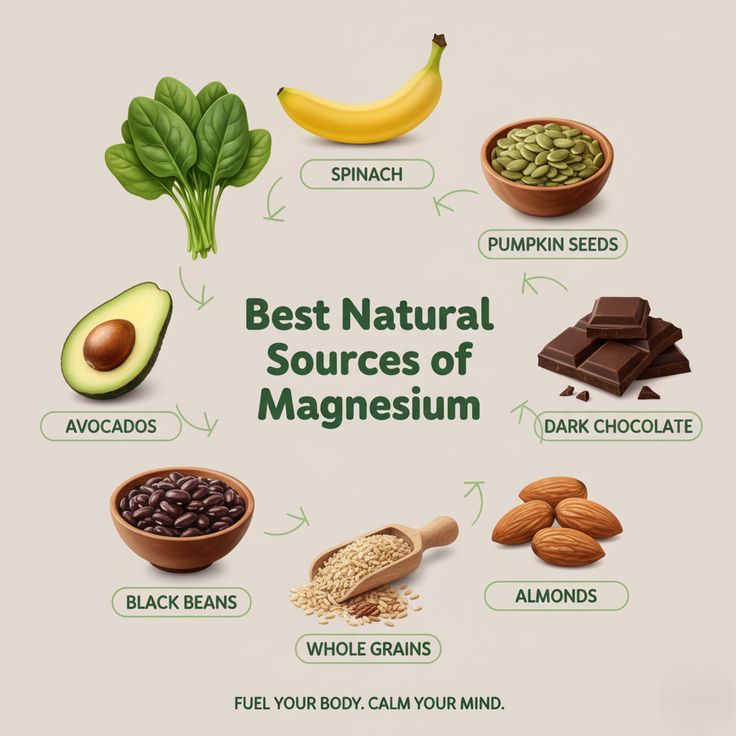
Dark chocolate with 70 percent or more cacao content is one of the richest dietary sources of magnesium. A 30 gram square contains roughly 65mg. Pumpkin seeds are exceptional, with a small handful providing close to 150mg. Dark leafy greens, particularly spinach, Swiss chard, and kale, are solid sources. So are legumes, avocado, and whole grains.
The challenge is that intensive farming practices have measurably reduced the magnesium content of soil over the past 50 years, which means that even people eating plenty of these foods may be getting less magnesium from them than the nutrient data tables suggest. This is one reason why food alone, while necessary, may not always be sufficient.

Something I Have Noticed in Conversations About This
When I talk to people about magnesium, a pattern comes up repeatedly. Someone says they tried magnesium and it did not do anything. When I ask which form they used, the answer is almost always oxide. Or they took it sporadically for a week and expected a dramatic result.
Magnesium repletion takes time. If your stores have been low for months or years, building them back takes consistent daily intake over several weeks before the full effect becomes apparent. The people who give up after ten days are often giving up right before the shift would have become noticeable.
Consistency is the part that makes the difference. Not the brand, not the dose within a reasonable range, not the timing, though evening is generally better for sleep benefits. Just showing up with it every day and giving your body the time it needs to actually use it.
Have you ever tried magnesium and noticed a difference, or tried it and felt nothing?
Please remember that what worked for me is shared as personal experience, not as a prescription. If you are pregnant, on medication, or managing a health condition, a conversation with your doctor before adding any supplement is always the right first step.
Leave a Reply