

Something happened to me about four years ago that I still think about.
I had been running on six hours of sleep for several months. Not dramatically short. Six hours sounds almost reasonable when you say it out loud. I was functional. I was getting things done. I told myself I was someone who simply did not need much sleep, which is something a lot of people tell themselves when the alternative is admitting that their schedule is unsustainable.
Then I took two weeks off and slept without an alarm for the first time in months.
The first three days I slept nine, ten, and eleven hours respectively. By the end of the two weeks I had stabilised at around eight and a half. And the difference in how I thought, felt, and moved through the world was so pronounced that it genuinely frightened me. Because it meant that what I had been calling functional for months was not functional at all. It was a heavily edited version of myself, operating on a fraction of available capacity, with no reliable way to notice how much had been subtracted.
That is the insidious thing about sleep debt. You adapt to it. And adaptation feels like coping.
What Sleep Debt Actually Means Biologically
The concept of sleep debt is sometimes dismissed as pop science, a metaphor rather than a measurable reality. The research tells a different story.
Your brain has a biological sleep need, an amount of sleep per 24-hour period that allows it to complete all of its necessary maintenance and restoration functions. This need varies between individuals, sitting somewhere between seven and nine hours for most adults, with genuine short sleepers who function optimally on less being far rarer than the number of people who claim to be them. The CDC sleep guidelines offer a useful starting point for understanding recommended sleep durations by age.
When you sleep less than your biological need on a given night, a deficit accumulates. This deficit has measurable physiological consequences that compound over time. Dr. Matthew Walker, a neuroscientist at UC Berkeley whose work on sleep I find among the most clearly communicated in this field, describes sleep debt as non-negotiable in the sense that the brain tracks it precisely and does not simply forget what it is owed.
The restoration of cognitive function after sleep deprivation takes considerably longer than most people expect. Research from the University of Colorado found that a single recovery weekend after a week of restricted sleep did not fully restore metabolic function or cognitive performance. Some markers of impairment remained elevated even after the recovery period ended and restricted sleep resumed.
In other words, you cannot reliably repay significant sleep debt with a single long weekend. The biology does not work on a simple credit system.
What Happens Inside the Brain During Sleep
I want to spend some time on this because understanding what sleep is actually doing makes the consequences of skimping on it considerably more concrete.
During deep slow-wave sleep, the brain activates a recently discovered waste clearance system called the glymphatic system. This system uses cerebrospinal fluid to flush metabolic byproducts from brain tissue, including a protein called beta-amyloid, the same protein that accumulates in the brains of people with Alzheimer’s disease. The glymphatic system operates almost exclusively during deep sleep and at a rate approximately ten times higher than during waking hours. You can read more about how sleep deprivation affects brain health via the National Heart, Lung, and Blood Institute.
Chronic sleep restriction means chronic underperformance of this clearance system. The implications for long-term neurological health and inflammation are being taken seriously enough that sleep disruption is now considered one of the most significant modifiable risk factors for neurodegenerative disease in the research literature.

During REM sleep, the brain processes emotional experiences and consolidates memories. It essentially replays the day’s events, integrating them into existing memory networks and stripping them of their acute emotional charge. This is why a problem that felt overwhelming before sleep often feels more manageable the following morning. The emotional processing happened while you were unconscious.
When REM sleep is consistently cut short, as happens when you wake earlier than your body needs to, emotional regulation suffers measurably. Reactivity increases. The ability to modulate the intensity of emotional responses decreases. Research using fMRI has shown that sleep-deprived individuals show a 60 percent increase in amygdala reactivity to negative stimuli compared to well-rested controls. The amygdala is the brain’s threat-detection centre. Running it on insufficient sleep is like removing the moderating influence that keeps emotional responses proportionate.
The Hormonal Cascade Nobody Warns You About
Sleep is not a passive state. It is an active hormonal event, and the disruption of sleep disrupts hormonal rhythms in ways that affect almost every system in the body.
Growth hormone, which despite its name is responsible for tissue repair, muscle synthesis, and metabolic regulation in adults as well as children, is released in its largest pulse during the first deep sleep cycle of the night. If you go to bed late or sleep poorly in the early part of the night, this pulse is diminished or missed entirely. The tissue repair that should have happened overnight does not happen at the same rate. This compounds over weeks and months into slower recovery from exercise, poorer skin regeneration, and a metabolism that runs less efficiently than it should.
Testosterone follows a similar pattern, with the majority of daily production occurring during sleep. Studies in young healthy men have found that one week of sleeping five hours per night reduced testosterone levels by 10 to 15 percent, an effect equivalent to ageing ten to fifteen years. The implications for energy, mood, muscle mass, and libido are not subtle.
Leptin drops and ghrelin rises with sleep deprivation, a combination that increases appetite and specifically drives cravings for calorie-dense foods, a mechanism I touched on in the article about afternoon energy crashes and blood sugar. What I want to add here is that this hormonal shift is not a matter of willpower. You are not choosing to be hungrier because you slept badly. Your endocrine system is making that choice based on the signals it has received.
The Performance Illusion
This is the part I find most worth sitting with, because it has practical implications for how we assess our own state.
Research by Dr. David Dinges at the University of Pennsylvania demonstrated something deeply uncomfortable. When subjects were restricted to six hours of sleep per night for two weeks, their cognitive performance declined progressively and significantly across that period. But their subjective assessment of how impaired they felt stabilised after a few days. They reported feeling only slightly sleepy. Their performance data told a completely different story.
The brain adapts its perception of its own impairment when sleep restriction is sustained. You genuinely feel like you are coping because your baseline for normal has quietly shifted downward to meet your current state. This is why so many people who discover genuine sleep adequacy for the first time after a long period of restriction describe it the way I did at the beginning of this article. Not as feeling better than usual, but as remembering what they actually are.
If you are reading this and thinking that you are definitely one of the people who genuinely functions well on less sleep, I am not going to argue with you directly. I will just say that the research on true short sleepers, people who carry a specific genetic variant allowing them to function without cognitive decline on less sleep, suggests they represent somewhere between one and three percent of the population. The odds are worth considering.
What Improved My Sleep Quality
I want to be specific here because the general advice around sleep hygiene is so widely repeated that it has started to feel meaningless to most people who hear it.
The change that made the most difference for me was not the obvious one. It was consistent wake time, maintained even on weekends, even after poor nights. Your circadian rhythm and sleep stages are anchored primarily by your wake time rather than your sleep time. Keeping it consistent builds the biological pressure for sleep that makes falling asleep easier and deepens sleep quality over time. Variable wake times, including sleeping in significantly on weekends, fragment this rhythm in ways that make weekday sleep worse, a pattern sometimes called social jetlag.

The second significant change was temperature. Core body temperature needs to drop by approximately one degree Celsius to initiate and maintain sleep. A room that is too warm actively interferes with this process. I started sleeping with the window slightly open year-round and noticed the difference in sleep depth within about a week.
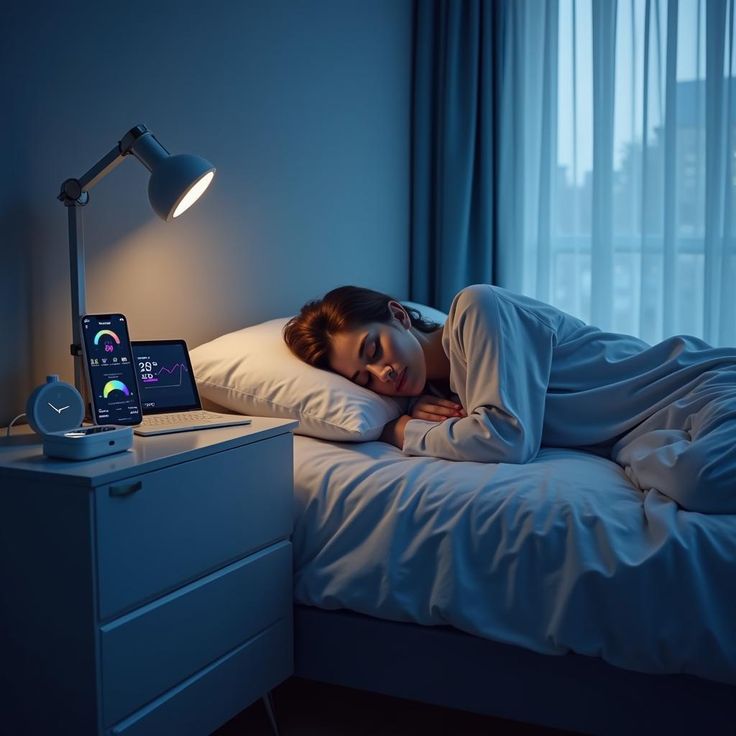
The third was light exposure, both getting bright light in the first thirty minutes after waking, which anchors the circadian clock and sets the timing of the evening melatonin rise, and avoiding bright overhead light in the two hours before bed in favour of low, warm light sources. These two bookends to the day produced more noticeable improvement than any magnesium or sleep support supplement I tried during the same period.
One Thing Worth Knowing About Catching Up
I said earlier that you cannot repay significant sleep debt with a single weekend. That is true. But it is also true that the body does make genuine progress toward recovery with extended adequate sleep over several consecutive weeks.
The key word is consecutive. Occasional long sleeps surrounded by restricted nights do not produce the same physiological benefit as a sustained period of sleeping to your natural need. If you suspect you are carrying significant sleep debt, the most useful thing you can do is create a two to three week period where you go to bed earlier, remove the alarm, and let your body sleep until it wakes naturally. What you sleep in that first week tells you how deep the debt runs. What you sleep by the third week is closer to your actual biological need.
That information is worth having. It changes the conversation you have with yourself about what adequate sleep actually looks like for you specifically, which is more useful than any general guideline.
Leave a Reply