
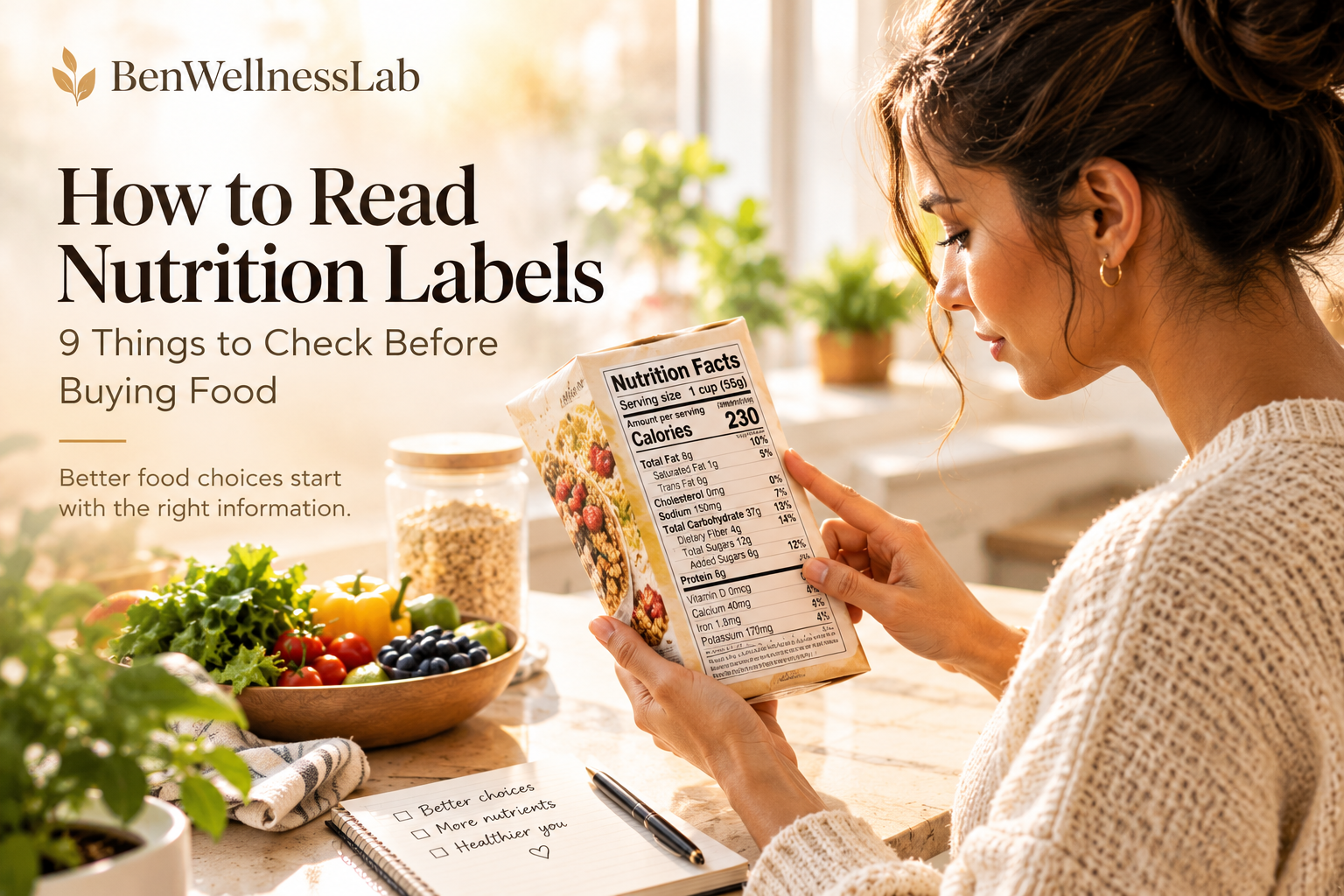
Have you ever picked up a food package because it looked healthy, only to discover that it contained more sugar, salt, or calories than you expected? It is a common experience. Packaging often highlights attractive claims such as natural, light, multigrain, or high protein, but those words do not tell you everything about what is inside. Learning how to read nutrition labels helps you look beyond those claims and understand what you are actually buying.
Learning how to read nutrition labels can make grocery shopping easier. Instead of relying entirely on advertisements or the claims printed on the front of a package, you can examine the actual nutrition information and decide whether a product fits your needs.
The good news is that you do not need a degree in nutrition to understand nutrition labels. Once you know which details matter most, you can compare products more confidently, identify ingredients you want to limit, and find foods that provide more of the nutrients your body needs.
In this guide to how to read nutrition labels, we will look at nine important things to check on packaged foods, explain what the numbers mean, and share practical tips you can use during your next shopping trip.
Why Reading Nutrition Labels Matters for Everyday Choices
Nutrition labels provide information about the nutrients and ingredients in packaged foods. Depending on the product and the country’s labeling rules, they may include calories, protein, carbohydrates, total sugars, added sugars, fat, sodium, fiber, vitamins, minerals, and serving information. Knowing how to read nutrition labels helps you understand this information in context.
Understanding this information can help you make choices that support your overall eating habits.
For example, two breakfast cereals may look almost identical on the shelf. One might provide more fiber and less added sugar, while the other contains less fiber and a larger amount of added sugar. Comparing their labels gives you a better basis for choosing between them.
Reading labels is not about finding a perfect food or avoiding every ingredient you do not recognize. It is about understanding what you are buying and making informed decisions that work for your health, preferences, and budget.
1. Check the Serving Size on Nutrition Labels First
The serving size is one of the most important parts of a nutrition label because it provides the basis for the numbers listed underneath it.
Suppose a package of biscuits lists a serving size of 30 grams. The calories, sugar, fat, and other nutrients on the label generally refer to that amount, not necessarily to the entire package.
If you eat twice the listed serving size, you consume approximately twice the listed calories and nutrients.
For example, imagine a snack contains 150 calories per serving and the package contains three servings. Eating the entire package would provide 450 calories, assuming the label values apply to the full amount consumed.
This is why checking serving size can prevent misunderstandings.
What to do: Look at the serving size and the number of servings in the package before comparing calories or nutrients. If you normally eat a larger portion, take that into account.
Remember that a serving size on a label is not automatically a recommendation for how much you should eat. Your needs and appetite may be different.
2. Understand Calories on Nutrition Labels in Context
Calories measure the energy food provides. Your body uses this energy for essential functions, movement, maintaining body temperature, and other daily activities.
The calorie number on a food label can help you understand how much energy a serving provides, but it should not be the only factor guiding your choices.
A food with more calories is not automatically unhealthy. Nuts, seeds, avocado, and other nutrient-rich foods can provide substantial energy alongside beneficial nutrients. Meanwhile, a product with fewer calories may offer little fiber or protein.
The right choice depends on the food, your portion, your overall diet, and your individual needs.
For instance, if you are comparing two breakfast options, consider their calories alongside their protein, fiber, added sugar, and how satisfying they are likely to be.
What to do: Use calorie information as one part of the picture. Avoid judging a food entirely by whether its calorie count is high or low.
3. Look at Added Sugars, Not Just Total Sugars
Sugar is another important detail to check, especially when comparing breakfast cereals, flavored yogurt, sweetened drinks, sauces, biscuits, and packaged snacks.
Nutrition labels may list both total sugars and added sugars.
Total sugars include sugars that occur naturally in foods, such as those found in milk and fruit, as well as sugars added during processing.
Added sugars are sugars added to a product during preparation or manufacturing. They can include table sugar, syrups, honey, and other sweetening ingredients.
These figures are not interchangeable.
For example, plain yogurt contains naturally occurring milk sugar. A flavored yogurt may contain that same natural sugar plus added sugar. Looking at the added sugar figure, when available, helps you understand the difference.
Excessive added sugar intake can make it harder to maintain a balanced diet, particularly when sweetened foods and drinks displace more nutrient-rich options.
What to do: Compare added sugar amounts between similar products. Check the serving size as well, because a product may contain multiple servings.
You do not need to eliminate every food containing sugar. The aim is to understand where added sugars appear in your diet and make choices that suit your overall eating pattern.
4. Pay Attention to Sodium on Nutrition Labels
Sodium is a mineral that helps the body maintain fluid balance and supports normal nerve and muscle function. However, consuming too much sodium over time can contribute to high blood pressure in susceptible individuals.
Packaged foods can contain substantial amounts of sodium, even when they do not taste particularly salty.
Common sources include instant noodles, seasoning powders, stock cubes, canned foods, processed meats, salty snacks, sauces, and some ready-made meals.
This is especially worth remembering when preparing meals with several packaged ingredients. A seasoning cube, sauce, and processed meat can each contribute sodium to the same dish.
What to do: Check the sodium amount per serving and compare similar products. If you regularly use seasoning mixes, stock cubes, or bottled sauces, consider how much sodium they contribute to your overall meals.
Where practical, try using herbs, spices, garlic, ginger, onions, and other flavorings to add variety without relying entirely on salty seasonings.
People with medical conditions that require sodium restriction should follow advice from their healthcare professional.
5. Check Saturated Fat and Trans Fat on Nutrition Labels
Fat is an essential part of a balanced diet. It helps the body absorb certain vitamins, supports cell function, and provides energy.
However, the type of fat matters.
Nutrition labels may list total fat, saturated fat, and trans fat separately. Saturated fat is found in foods such as butter, fatty meats, and some tropical oils. Trans fat may occur in small amounts naturally in some animal products, while industrial trans fats have been restricted or eliminated in many countries.
Diets high in saturated fat can raise LDL cholesterol in many people, which is associated with a higher risk of cardiovascular disease. Industrial trans fats are also associated with increased cardiovascular risk.
You do not need to avoid every food containing fat. Instead, consider the overall pattern of fats in your diet.
What to do: When comparing similar packaged products, look at their saturated fat content and check for trans fat where it is listed. Favor a balanced pattern that includes sources of unsaturated fats, such as nuts, seeds, and suitable vegetable oils.
Also, do not assume that a product labeled low fat is automatically healthier. Check its sugar, sodium, fiber, and other nutritional details too.
6. Look for Dietary Fiber on Nutrition Labels
Fiber is an important component of a healthy diet. It supports digestive health, can help with bowel regularity, and may contribute to feeling satisfied after meals. Certain types of fiber can also help improve blood cholesterol and support blood sugar management.
Good sources of fiber include beans, lentils, vegetables, fruits, whole grains, nuts, and seeds.
On packaged foods, fiber may appear under total carbohydrates or in a separate line within the nutrition information.
When comparing bread, cereal, crackers, or other grain-based products, checking the fiber content can help you identify options that provide more of this nutrient.
Be cautious about judging a product by the word whole grain alone. Check the ingredient list to see which grains are actually included and how prominently they appear.
What to do: Compare the fiber content of similar products and look for ways to include fiber-rich foods in your everyday meals. If you are increasing fiber intake, do so gradually and drink enough fluids to help your digestive system adjust.
7. Read the Protein Information on Nutrition Labels
Protein helps build and maintain muscles and other body tissues. It also plays a role in producing enzymes, hormones, and components of the immune system.
Packaged foods such as yogurt, milk alternatives, cereals, snack bars, and ready-made meals may advertise their protein content prominently.
However, a high-protein claim does not tell you everything about a product. A snack bar may contain protein but also considerable added sugar. Another product may provide protein alongside fiber and other useful nutrients.
Protein requirements vary with age, body size, activity, health status, and other factors.
What to do: Check the protein amount per serving when comparing foods. Consider the full nutritional profile rather than selecting a product simply because its packaging emphasizes protein.
Everyday protein sources can include beans, lentils, eggs, fish, dairy foods, nuts, seeds, and other foods that fit your dietary preferences.
8. Understand Percent Daily Value on Nutrition Labels
Some nutrition labels include a column marked % Daily Value, often shortened to %DV.
This percentage indicates how much a nutrient in one serving contributes to a reference daily amount. It helps you compare the nutritional contribution of different products without needing to calculate everything yourself.
On the US Nutrition Facts label, a general guide is:
- 5% Daily Value or less is considered low for a nutrient.
- 20% Daily Value or more is considered high for a nutrient.
For example, a product with 25% Daily Value for sodium provides a relatively large share of the reference daily amount in one serving.
For nutrients you want to limit, such as sodium and saturated fat, a lower percentage may be preferable. For nutrients you want to obtain in adequate amounts, such as fiber, a higher percentage may be useful.
These figures are general reference points, not personalized targets.
An important note for international readers: Nutrition labels vary by country. Some products display percentage daily values, while others provide nutrient amounts per serving or per 100 grams. Always check which measurement system the package uses before comparing products. When labels use different serving sizes or reference values, make sure you are comparing equivalent amounts.
9. Read the Ingredient List and Look Beyond Front-of-Pack Claims
The ingredient list tells you what a packaged product contains. It complements the nutrition panel by providing information about the ingredients used to make the food.
In many countries, ingredients are listed in descending order by weight, although specific labeling rules and exceptions vary.
This means the ingredients appearing near the beginning generally make up a larger proportion of the product than those listed later.
For example, if sugar appears near the beginning of a breakfast cereal’s ingredient list, it may be a significant component of the product. If whole grains appear prominently, that may provide useful information about its composition.
You can also use the ingredient list to identify allergens, ingredients you prefer to avoid, and substances relevant to your dietary requirements.
Now consider the claims printed on the front of the package.
Words such as natural, multigrain, light, and wholesome can sound appealing, but they do not replace the nutrition panel. A multigrain product may contain several types of grain without being predominantly whole grain. A natural product may still contain considerable added sugar or sodium.
What to do: Read the front and back of the package. Use marketing claims as prompts to investigate, not as proof that a food is healthier.
If you have a food allergy, check the allergen declaration carefully and follow appropriate precautions. Do not rely on the ingredient list alone when a product’s allergen labeling or cross-contact information is important to your safety.
How to Use Nutrition Labels to Compare Two Packaged Foods
Knowing how to read nutrition labels is helpful, but the real benefit comes when you use that information to make a decision.
Imagine you are comparing two breakfast cereals.
Cereal A has more added sugar and less fiber per comparable serving. Cereal B has less added sugar and more fiber per comparable serving.
If both products fit your preferences, budget, and dietary needs, Cereal B may be the more suitable choice for someone looking to increase fiber and reduce added sugar.
However, a useful comparison requires consistent measurements. If one product lists nutrients per 30 grams and another lists them per 100 grams, the numbers cannot be compared directly without adjusting for the difference.
Here is a simple process you can use:
- Compare the serving sizes or use the per-100-gram figures where available.
- Check calories if energy intake is relevant to your needs.
- Compare added sugar and sodium.
- Look at saturated fat and fiber.
- Check protein and other nutrients relevant to your goals.
- Read the ingredient list and allergen information.
- Consider price, taste, convenience, and how the food fits into your overall diet.
The goal is not to find a product that wins in every category. It is to choose an option that makes sense for you.

Common Mistakes to Avoid When Reading Nutrition Labels
Even people who pay attention to nutrition can misunderstand certain parts of food packaging.
Assuming low calorie means healthy. Calories do not tell you the full nutritional value of a product.
Ignoring serving size. The numbers may refer to a smaller portion than you usually eat.
Confusing total sugar with added sugar. These figures describe different things.
Trusting the front of the package without checking the back. Marketing language does not provide a complete nutritional picture.
Avoiding all fat. The body needs dietary fat, and the type of fat matters.
Treating every unfamiliar ingredient as dangerous. An unfamiliar name does not automatically indicate that an ingredient is harmful. Look at reliable sources and consider the ingredient’s purpose and the overall product.
Comparing products with different serving sizes. Use the same serving weight or compare values per 100 grams whenever possible.
Avoiding these mistakes can make label reading faster and more useful.
Practical Tips for Using Nutrition Labels During Grocery Shopping
You do not need to spend several minutes studying every package you buy. Start with the products you eat most frequently.
For example, you might compare two brands of bread, breakfast cereal, yogurt, canned beans, or instant noodles. Once you understand their labels, you will have a better idea of which options fit your preferences.
A few habits can make the process easier:
- Compare similar products rather than unrelated foods.
- Check added sugar and sodium in frequently purchased packaged foods.
- Choose fiber-rich options when they fit your needs and budget.
- Read ingredient lists when you have allergies or dietary restrictions.
- Do not let attractive packaging replace nutritional information.
- Remember that fresh, frozen, canned, and dried foods can all fit into a balanced diet.
- Consider the overall meal rather than judging a single ingredient in isolation.
You can also make healthy eating more affordable by combining packaged staples with accessible foods such as beans, lentils, eggs, seasonal fruit, vegetables, and whole grains.
Healthy eating does not require purchasing the most expensive product or choosing every item marketed as premium. It requires making informed choices that you can maintain over time.
Frequently Asked Questions About How to Read Nutrition Labels
What is the most important thing to check on nutrition labels?
Start with the serving size because all the nutrient amounts generally depend on it. Then focus on the information most relevant to your needs, such as added sugars, sodium, fiber, saturated fat, or protein. This is a practical starting point for learning how to read nutrition labels.
How can I tell if a packaged food is high in sugar from its nutrition label?
Check the total sugar and added sugar figures where available. Compare similar products using the same serving size. On the US Nutrition Facts label, 20% Daily Value or more for added sugars is generally considered high for one serving. Other countries may use different labeling systems.
Are foods with long ingredient lists unhealthy?
Not necessarily. Ingredient-list length alone does not determine whether a food is healthy. Some nutritious products contain several ingredients, while others have very short ingredient lists but still contain substantial amounts of sugar or sodium.
Is a product labeled natural always healthier?
No. Natural is not a universal guarantee of nutritional quality. Check the ingredients and nutrition information to understand what the product contains.
Should I avoid all packaged foods?
No. Packaged foods can be convenient, nutritious, affordable, and safe when properly selected and stored. Options such as canned beans, frozen vegetables, plain oats, and some whole-grain products can be useful parts of a balanced diet.
What if a food label does not show all the nutrients I want to check?
Labeling requirements differ by country and product. Some nutrients may not be listed unless they are required or the manufacturer chooses to include them. You can compare the information that is available and consult the manufacturer’s official product information when appropriate.
Final Thoughts on How to Read Nutrition Labels
Learning how to read nutrition labels is a practical skill that can help you make more informed food choices without becoming overwhelmed by nutrition advice.
Start with the serving size, check the nutrients that matter most to you, compare similar products, and look beyond the claims printed on the front of the package. Over time, these simple nutrition-label reading habits can make grocery shopping feel less confusing.
Remember that no single number determines whether a food belongs in a healthy diet. What matters most is the overall pattern of what you eat, your individual needs, and the choices you can sustain in everyday life.
You do not have to change everything at once. Start by comparing one or two products on your next shopping trip. Small, informed decisions can help you build a more balanced approach to eating over time.
References
- US Food and Drug Administration. How to Understand and Use the Nutrition Facts Label. https://www.fda.gov/food/nutrition-facts-label/how-understand-and-use-nutrition-facts-label
- US Food and Drug Administration. Added Sugars on the Nutrition Facts Label. https://www.fda.gov/food/nutrition-facts-label/added-sugars-nutrition-facts-label
- US Food and Drug Administration. Changes to the Nutrition Facts Label. https://www.fda.gov/food/nutrition-food-labeling-and-critical-foods/changes-nutrition-facts-label
Health information disclaimer: This article is for general educational purposes and is not a substitute for individualized medical or dietary advice. Read the full Medical Disclaimer for important context. If you have a medical condition, food allergy, or specific nutritional requirements, consult an appropriately qualified healthcare professional.
Leave a Reply