
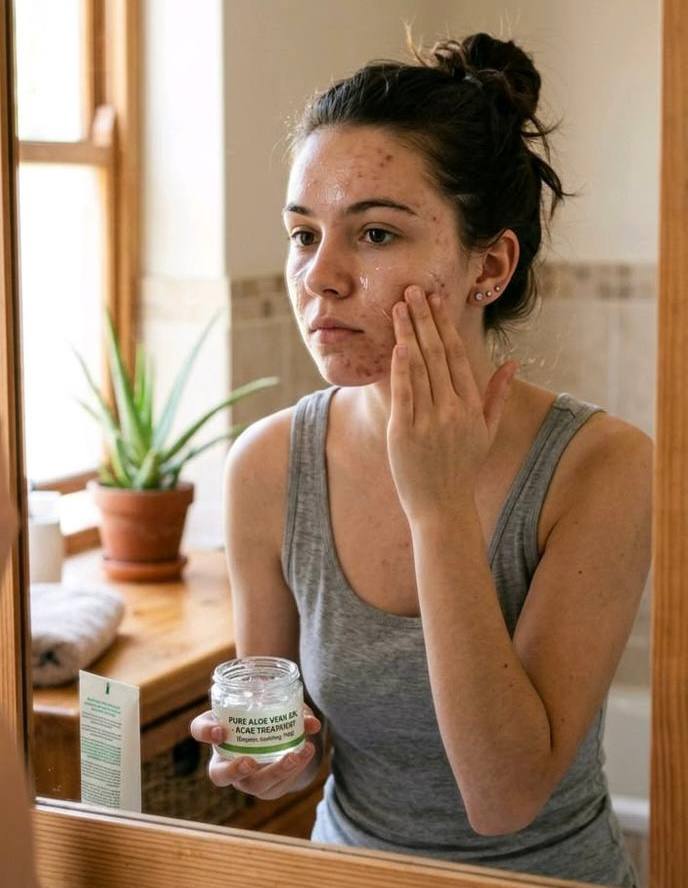
Clear skin is not the result of a single product or one isolated organ quietly doing its own thing while the rest of your body gets on with more important business. Your skin is the largest organ you have, and it shares a direct biological conversation with your nervous system, your immune system, your gut, and your endocrine system, which means any discussion here is meant to inform, not replace medical care or individual guidance from your own clinician. Because your skin is visible in a way that your liver and adrenal glands are not, it often becomes the place where internal dysfunction announces itself most publicly, and that is the perspective this article will explore with caution and respect for the limits of what we can know from the outside.
I spent years treating my skin as a surface problem requiring surface solutions. Different cleansers, different moisturisers, topical treatments that worked temporarily and then stopped, or worked in one area while something new appeared somewhere else. The skin kept sending messages and I kept trying to silence the messenger rather than read what it was actually saying.
The shift happened when I stopped asking what is wrong with my skin and started asking what is happening inside my body that my skin is responding to.
Your skin and your brain develop from the same embryonic tissue. This shared origin means they maintain an intimate biological relationship throughout life, through what researchers now call the brain-skin axis.
Clear Skin and the Stress-Skin Axis
When your stress response activates, corticotropin-releasing hormone (CRH) is released from the hypothalamus. CRH does not just signal the adrenal glands to produce cortisol. It also acts directly on skin cells. Keratinocytes, the primary cells of the outer skin layer, have CRH receptors. Mast cells in the skin, which release histamine and inflammatory compounds, are directly activated by CRH. Sebaceous glands, which produce the oil that can contribute to acne when overproduced, respond to stress hormones by increasing their output.
This means that a stressful period does not just affect how you feel. It produces measurable changes in the biological behaviour of your skin: increased inflammation, increased oil production, impaired barrier function, and slower wound healing, all simultaneously.
If you have ever noticed that your skin reliably worsens during particularly stressful periods and then improves when things settle down, you were not imagining a connection. You were observing a direct biological relationship.
If you have ever noticed that your skin reliably worsens during particularly stressful periods and then improves when things settle down, you were not imagining a connection. You were observing a direct biological relationship.
Cortisol and the Skin Barrier
The skin barrier, the outermost layer of the epidermis, is your body’s primary defence against environmental threats, allergens, bacteria, and water loss, and a resilient barrier is essential for maintaining clear skin. It is composed largely of lipids, proteins, and tightly connected cells that form something like a brick-and-mortar structure. Research into the relationship between the skin barrier and the microbiome has shed considerable light on how this structure is disrupted and how those disruptions can show up on the surface as less than clear skin.
Chronically elevated cortisol degrades this barrier. It reduces the production of the lipids that maintain the barrier’s integrity, increases transepidermal water loss, and slows the turnover of skin cells that keeps the barrier renewed. The result is skin that is simultaneously drier, more reactive to environmental irritants, more prone to inflammatory flares, and less able to heal efficiently when damaged.
This is why people under sustained chronic stress often find that their skin becomes sensitive to products it previously tolerated without issue. The barrier has thinned, the threshold for irritation has dropped, and applying more products in an attempt to fix the problem can sometimes make things worse by further disrupting a barrier that needs restoration rather than treatment.
Less is often more during these periods. Gentle, minimal, barrier-supporting products tend to serve better than complex multi-step routines that introduce more potential irritants than they resolve.

Clear Skin, Gut Health, and the Skin Conversation
There is a concept in dermatology research called the gut-skin axis, and it has gained considerable traction in the past decade as the evidence connecting microbiome health to common skin conditions such as acne and overall clear skin has accumulated.
The connection operates through several mechanisms. Intestinal permeability allows bacterial components to enter the bloodstream and trigger systemic inflammation, which the skin reflects as inflammatory conditions including acne, rosacea, eczema, and psoriasis. The gut microbiome also influences systemic levels of short-chain fatty acids, which have anti-inflammatory properties that extend to skin tissue. And the gut-brain axis feeds into the brain-skin axis, creating a triangle of communication between these three systems that can amplify dysfunction in any one of them.
A landmark 2018 study found that people with rosacea had a significantly higher prevalence of small intestinal bacterial overgrowth compared to healthy controls, and that treating the SIBO produced measurable improvement in rosacea symptoms in the majority of participants. The skin condition was a manifestation of a gut condition. Treating the skin alone would have left the root cause untouched.
I find this kind of research clarifying in a way that purely topical dermatology never was for me, because it reframes the question from what do I put on my skin to what is happening in my body that my skin is expressing.
Clear Skin, Inflammation, and Specific Skin Conditions
Different inflammatory patterns tend to produce different skin presentations, and understanding which pattern is active gives some direction about where to look internally when supporting clear skin.
Acne that is primarily hormonal, clustering around the jawline and chin and worsening in the week before menstruation, tends to reflect androgen excess relative to oestrogen, often compounded by insulin resistance and elevated IGF-1 from high glycaemic diets. The relationship between diet and acne is increasingly well documented. This hormonal pattern is not the same as teenage acne driven primarily by general sebum overproduction during puberty, and treating them identically produces disappointing results.
Eczema and dermatitis that flares with stress and improves in calm periods points toward the cortisol-barrier connection described above, often with a gut permeability component. The skin is reacting to a combination of impaired barrier function and chronic inflammation that the barrier can no longer contain.
Rosacea, with its characteristic flushing, redness, and visible blood vessels, often involves mast cell hyperreactivity, histamine intolerance, and gut dysbiosis. The triggers that worsen rosacea, heat, spicy food, alcohol, certain fermented foods, are largely the same triggers that worsen histamine intolerance. This overlap is not coincidental.
Psoriasis involves an autoimmune component in which the immune system attacks skin cells, accelerating their turnover to an abnormal degree. Gut permeability and systemic inflammation are consistently elevated in psoriasis. Chronic stress is one of the most reliably documented triggers for psoriasis flares, mediated through the same CRH pathway described at the beginning of this article.
What I Changed to Support Clear Skin
I want to be honest that this was not a linear process, and that the improvements I have seen in my own clear skin journey came from changes that had nothing to do with skincare products but instead with how I approached my health more broadly to support clear skin.
Reducing dietary sugar and refined carbohydrates made a more visible difference to my skin than any topical treatment I had ever used. The mechanism involves insulin and IGF-1, which stimulate sebaceous glands and promote the keratin overproduction that blocks pores. I also made sure to prioritise nutrients shown to support skin repair, including zinc for skin health. Within about six weeks of significantly reducing my intake of high glycaemic foods, my skin texture changed in a way that felt structural rather than superficial.

Addressing my gut health, through the dietary changes I described in the gut health article, produced improvements in skin redness and sensitivity that I had not anticipated. I had not consciously connected my gut and my skin, but the body clearly had.
Managing my stress load more honestly, not just coping with it better but actually reducing it, changed the inflammatory baseline my skin was operating from. During periods of high stress my skin tells me before anything else does. I have learned to read it as information rather than a cosmetic problem, which has changed my relationship with it considerably.
Everything I have shared here reflects personal experience and general research.🙏
Skin conditions can have complex and individual causes.
If you are dealing with a persistent or severe skin condition, working with a dermatologist who is open to the internal connections I have described here will give you considerably more than one who treats only the surface.


Leave a Reply